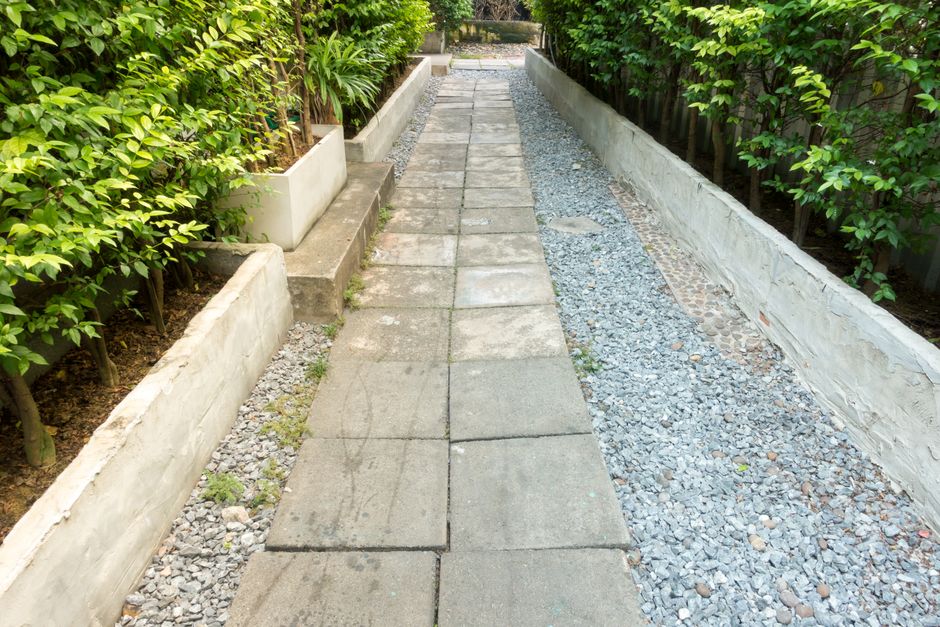
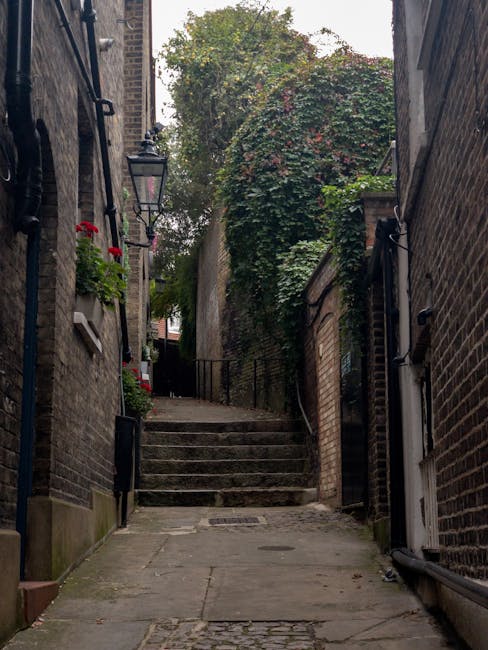
What to know about narrow access for Holloway gardeners
Narrow access can turn a simple garden job into a careful little puzzle. One minute you are thinking about hedge trimming or a fresh lawn tidy-up, and the next you realise the side passage is too tight for a wheelbarrow, the gate opens awkwardly, or the only route to the back garden is through a house full of shoes, prams, and everyday life. That is exactly why What to know about narrow access for Holloway gardeners matters. If you live in a terraced street, a converted property, or a home with a compact rear entrance, the way a gardening team reaches the garden can shape the whole job: timing, tools, cost, and even what is possible on the day.
This guide walks through the practical side of narrow access in plain English. You will see how it works, what problems tend to crop up, how professionals usually handle it, and how to avoid the kind of small mistakes that create big delays. Truth be told, a few centimetres can make all the difference.
Table of Contents
- Why narrow access matters
- How narrow access arrangements work
- Key benefits and practical advantages
- Who this is for and when it makes sense
- Step-by-step guidance
- Expert tips for better results
- Common mistakes to avoid
- Tools, resources and recommendations
- Law, compliance, standards, or best practice
- Options and comparison table
- Case study or real-world example
- Practical checklist
- Conclusion
- Frequently asked questions
Why narrow access matters
Narrow access is not just an inconvenience. It affects the shape of the work from the very beginning. If a gardener cannot bring mowers, bags, cutting tools, soil, or clearance waste through the easiest route, then everything has to be planned more carefully. That may sound obvious, but in real jobs it often gets missed until someone is standing at a tiny side gate with a full trolley and a slightly tired expression.
In Holloway, where many homes have compact front paths, basement entries, shared hallways, or rear access through terraced layouts, the challenge is often not the garden itself but the route to it. A simple maintenance visit may still be perfectly straightforward, but a larger job like garden clearance, hedge reduction, or landscaping can become a logistical one.
Why does this matter so much? Because access affects:
- how long a job takes
- which equipment can realistically be used
- how waste gets removed
- how much labour is needed
- whether furniture, walls, paving, or fences need extra protection
If access is tight, the work is still possible more often than people expect. It just needs better planning and the right expectations. That is the big difference.
A good starting point is a clear conversation before the visit, ideally alongside a look at the relevant service pages such as gardening services or garden maintenance if you need ongoing care rather than a one-off visit.
How narrow access arrangements work
Narrow access usually means any route into the garden that restricts movement of tools, waste, or equipment. That can be a slim alley, a steep passage, awkward steps, a gate that only opens halfway, or an indoor route that needs careful protection. There is no universal measurement that defines it in every setting. In practice, if the team has to slow down, carry items by hand, or change equipment choices, you are dealing with narrow access.
The process normally begins with a quick access assessment. This can be done from photos, a video, or a short site visit. A gardener will want to know things like:
- the width of the entrance points
- whether gates open fully
- if there are steps, slopes, or low walls
- how far the garden sits from the road
- whether waste can be removed without passing through the house
- if there is parking or drop-off nearby
After that, the team usually decides whether the job can be completed with standard handheld tools, lightweight machines, or a more manual approach. For example, a lawn that might normally be tackled with a mower could need strimming and hand edging instead. A clearance project might need bags moved in stages rather than being wheeled straight out.
This is also the point where trust matters. A careful provider should explain the practical limits honestly, rather than promising a "no problem at all" job and hoping for the best. Let's face it, gardens rarely care about wishful thinking.
If the work involves more structural change, you may also want to explore landscaping or landscape gardening, because access planning becomes even more important when materials and larger items are involved.
Key benefits and practical advantages
It may sound odd to talk about benefits in the context of a tight side passage or a narrow gate, but there are real advantages to planning access properly. The first is predictability. When a team knows what they are walking into, the visit tends to feel calmer and more efficient. No one likes a job that starts with improvisation before the kettle has even boiled.
Here are the main benefits of getting narrow access right from the start:
- Less disruption - fewer surprises for you, the gardener, and any neighbours
- Better safety - less carrying in awkward positions and fewer collisions with walls or windows
- Cleaner results - waste can be organised properly rather than left in small piles
- More accurate pricing - the quote is more likely to reflect the real work
- Smarter equipment choices - the team can bring what actually fits
There is also a subtle but important advantage for the garden itself: damage risk goes down. In a narrow route, one careless brush with a gate post can chip paint, bend a hinge, or mark a wall. When access is planned well, those risks drop sharply.
Practical summary: narrow access is not a deal-breaker. It is a planning issue. If the route is measured properly and the job is scoped honestly, most small and medium garden tasks can still be completed efficiently.
For bigger jobs, services like garden clearance and patio cleaning are often more manageable when the access route is understood beforehand, because both work and waste handling can be organised with less faff.
Who this is for and when it makes sense
Narrow access is relevant to far more people than you might think. It is not just for the "tricky" gardens. It applies to many Holloway properties, especially older terraces, flats with shared entrances, homes with basements, and plots where the garden sits behind the building rather than beside it.
This matters most if you are:
- booking regular maintenance in a compact rear garden
- planning a one-off tidy-up after a long gap
- looking at hedge trimming where tools need to pass through a tight route
- considering lawn care in a garden that only allows handheld access
- preparing for tree surgery or tree lopping where larger materials may need careful removal
- upgrading a space with fencing, decking, or other features that involve materials
Sometimes the access issue is obvious. Other times, it only becomes clear when the job is underway. A customer might say, "It's just through the side passage," and then you discover the passage is narrow, uneven, and currently shared with bicycles, a compost caddy, and a stubborn bin lid. Very normal, by the way.
If you are deciding between a routine visit and a more involved project, it can help to compare the likely access demands of lawn mowing versus tree surgery. One needs compact, repeatable movement; the other may need more planning, more clearance space, and better waste handling.
Step-by-step guidance
Here is the simplest way to handle a narrow access job without making it harder than it needs to be.
-
Measure the route honestly.
Check gate widths, passage widths, step heights, and any tight turns. A quick tape measure and a few photos are often enough to start.
-
Clear the access path.
Move plant pots, bikes, bins, hose reels, and anything else that makes a route feel smaller than it already is. The difference can be surprisingly large.
-
Share clear photos before the visit.
Take one from the street, one along the route, and one of the garden entrance. If there is a step or tight corner, photograph that too.
-
Flag anything awkward early.
Low ceilings, slippery paving, shared hallways, or awkward locks should be mentioned in advance. It saves time and awkwardness on the day.
-
Match the service to the access.
For example, regular maintenance may work better than a single heavy clearance if the route is especially restricted. Likewise, a smaller machine or hand tool may be better than trying to force a larger one through.
-
Plan waste removal separately if needed.
If garden waste cannot be moved out easily, ask how it will be bagged, staged, or carried. This matters a lot for larger jobs.
-
Confirm the final scope before work starts.
This is where good communication pays off. A small adjustment made before the first cut is easier than a major rethink halfway through the job.
If the access route also affects how often you need ongoing attention, a package built around lawn care or hedge trimming may be more sensible than trying to bundle everything into one oversized visit.
Expert tips for better results
After a while, you notice that narrow access jobs go better when people stop trying to make them look easy and instead make them well organised. That sounds simple, but it really is the trick.
- Use photos with context. Stand back a little. Close-up images can hide the true shape of a route.
- Keep pets and children out of the working path. Sounds obvious, but in a narrow route the margin for error is slim.
- Ask about hand-carry limits. Some items are fine in theory but tiring in practice. A short passage with repeated trips can add up quickly.
- Think in stages. A large clear-up may be smoother if waste is bagged and moved in batches rather than piled up at the end.
- Protect surfaces early. Old paving, painted fences, and narrow door frames benefit from basic protection before work starts.
One little tip that tends to help: if the route is tight, leave lights on in dim hallways and open gates fully before the team arrives. It saves a lot of "just a moment while I find the latch" energy.
For more permanent upgrades that may improve access over time, consider whether fencing or decking services could be part of a longer-term garden plan. Not every job needs those changes, of course, but if access is repeatedly awkward, the layout itself may deserve attention.
Common mistakes to avoid
The biggest mistake is assuming that "it'll be fine on the day." That approach works right up until it does not. Narrow access jobs tend to fail for boring, preventable reasons rather than dramatic ones. A gate is too small. A route is blocked. A machine does not fit. Waste bags have nowhere to go. Nothing glamorous, just annoying.
Watch out for these common errors:
- Giving vague access details instead of actual measurements or photos
- Forgetting indoor access impacts when waste must pass through the house
- Leaving the route cluttered with everyday items
- Assuming standard equipment will fit without checking
- Underestimating the time needed for carrying, staging, and cleanup
- Not mentioning steps, slopes, or uneven ground
Another sneaky issue is overpromising on the result. If the access route limits what can be brought in, the end result may still be excellent, but the method will be different. That is not a problem. It just needs to be clear from the outset.
Good gardeners will usually welcome the honesty. It helps them do a better job, and it saves you the headache of mismatched expectations.
Tools, resources and recommendations
For narrow access, the right tools are usually less about brand and more about size, weight, and handling. In practical terms, smaller and more adaptable tools are often the best choice. Hand tools, compact mowers, lightweight clearing gear, and sturdy bags for waste are often more useful than big machinery that barely squeezes through a gate.
Commonly useful items include:
- measuring tape for gates, passages, and doorways
- camera phone for access photos
- garden waste bags that can be carried safely
- hand tools for edging, pruning, and tidying
- protective sheets or coverings for floors and walls when waste passes indoors
- basic lighting for dark side passages or basement routes
From a homeowner's point of view, the most useful "resource" is often preparation. A five-minute access check before the team arrives can remove half an hour of fiddling later. A small thing. A big difference.
If the access issue is tied to heavier vegetation or overgrown boundaries, it may be worth reviewing tree lopping and removal alongside garden clearance, because the handling of cut material is often where narrow routes become most noticeable.
Law, compliance, standards, or best practice
When garden work involves narrow access, the main compliance concerns are usually safety, safe handling, and clear communication. There is no single rulebook just for narrow access in domestic gardens, but standard UK practice is to work carefully, protect property, and avoid unnecessary risk to workers, residents, and neighbours.
In practice, a professional approach should take account of the following:
- Safe manual handling - carrying loads through tight spaces should be planned sensibly rather than rushed
- Trip and slip prevention - narrow passages, wet paving, and steps can be hazardous if left unmanaged
- Property protection - walls, paintwork, flooring, and doors should be considered where routes are tight
- Clear scope agreement - everyone should understand what is included before work starts
- Insurance and safety awareness - proper cover and safe working practices matter more in constrained spaces
If you want reassurance on the wider trust side, it is sensible to review the provider's health and safety policy and insurance and safety information. For service expectations and how jobs are handled, the site's terms and conditions can also help set the right expectations. In short: careful, transparent, and safe is the standard to look for.
And if you are comparing providers, it never hurts to check how they explain pricing, access limits, and payment arrangements in advance. That kind of clarity usually says quite a lot.
Options and comparison table
Different narrow access situations call for different approaches. Some are easy enough with handheld tools. Others need more staging and more time. A quick comparison can make the decision clearer.
| Approach | Best for | Pros | Potential drawbacks |
|---|---|---|---|
| Hand tools only | Tight side passages, small gardens, light maintenance | Flexible, low risk, usually easy to move through narrow routes | Slower for larger jobs |
| Compact equipment | Small lawns, tidy-up work, moderate access restrictions | More efficient than hand-only work, still manageable in tight spaces | May still be too bulky for very tight routes |
| Staged waste removal | Clearances, hedge cuts, mixed garden waste | Prevents clutter, keeps the work area safer | Needs more planning and more trips |
| Access improvement before work | Recurring jobs or major landscaping changes | Makes future visits easier and safer | May involve extra cost or property changes |
The "best" option depends on the job, not just the garden. A narrow route for a light tidy-up is one thing. A narrow route for a large clearance is something else entirely.
Case study or real-world example
Imagine a typical Holloway back garden behind a terraced property. The garden itself is modest, but the only access is through a narrow side passage and a back door with a small step. The owner wants a one-off tidy, hedge reduction, and removal of cuttings after months of growth. Nothing exotic. Just a normal, busy-household kind of job.
On paper, the task is straightforward. In reality, the access changes the rhythm. The team would likely start by clearing the passage, checking the gate, and deciding which tools can pass safely. The hedge might be cut with smaller tools rather than larger machines. Waste would need to be bagged and carried in manageable loads, then removed in stages to keep the passage clear.
What usually makes the difference here is communication. If the customer sends a couple of photos before the visit, the team can arrive with the right kit and a realistic plan. That means fewer delays, less lifting about, and a neater finish. Not perfect, maybe, but properly done. That is what most people want anyway.
In a slightly larger version of the same scenario, if the route were too awkward for repeated traffic, the gardener might recommend regular garden maintenance instead of waiting until the garden becomes a major clearance job. Small visits are often easier to manage than one heroic tidy-up after everything has run wild for six months. We have all been there.
Practical checklist
Use this checklist before booking any job involving narrow access. It keeps things simple and avoids a lot of back-and-forth later.
- Measure gate and passage widths
- Note steps, slopes, low ceilings, or awkward corners
- Take clear photos from several angles
- Move bins, bikes, pots, and clutter out of the route
- Tell the gardener if waste must pass through the house
- Ask whether compact equipment is suitable
- Confirm if there is parking or loading access nearby
- Flag any fragile surfaces, paintwork, or tight indoor areas
- Clarify whether the job is one-off or ongoing
- Check the scope, timing, and any access-related limitations before the visit
If you can do those ten things, you are already ahead of the game.
Get a free quote today and see how much you can save.
Conclusion
Narrow access does not have to make garden work stressful. It just means the job needs a sharper eye for planning, a bit more realism, and a provider who understands how to work in tighter spaces. In Holloway, that is especially relevant because many homes combine beautiful outdoor potential with access routes that are, frankly, a bit awkward. That is life in the city.
The good news is that most narrow access jobs can still be handled well when measurements, photos, safety, and equipment choices are sorted early. Whether you need lawn mowing, hedge trimming, patio cleaning, or a more involved tree surgery visit, clear access planning is what keeps things calm and efficient.
And honestly, once the route is sorted, the whole thing feels easier. The garden gets the attention it needs, the day stays manageable, and everyone avoids unnecessary hassle. Nice when that happens.
If you want a service that takes narrow access seriously from the start, begin with a proper conversation and a clear quote. The rest tends to follow naturally.
Frequently Asked Questions
What does narrow access mean for garden work?
Narrow access means the route into the garden is limited in width, height, or ease of movement. It can involve tight gates, side passages, steps, shared hallways, or awkward turns that affect how tools and waste are moved.
Can gardeners still work in a garden with very tight access?
Usually, yes. Many jobs can still be done with hand tools, smaller equipment, and staged waste removal. The exact method changes, but narrow access on its own does not automatically rule the job out.
Why do gardeners ask for photos before quoting?
Photos help them see the route, the gate, the steps, and any obstacles. A clear picture often gives a more accurate quote and avoids surprises on the day. It is a small request that saves a lot of muddle later.
Will narrow access make the job more expensive?
It can, because the work may take longer and involve more manual handling. That said, the increase depends on the size of the job, the type of access problem, and whether special equipment or extra labour is needed.
What should I measure before booking a gardener?
Measure gate widths, passage widths, and anything that narrows movement such as steps or tight corners. If the route is through the house, note door widths and any areas that might need protection.
Is it better to clear the access route myself first?
Yes, if you can. Moving bins, bikes, pots, and clutter out of the way makes the route safer and gives the team more room to work. It is one of the simplest ways to help the day go smoothly.
Do narrow access jobs need special equipment?
Sometimes. Smaller hand tools, compact mowers, and sturdy carry bags are often more useful than larger machines. The right equipment depends on what fits safely and what the job actually requires.
Can waste be taken out through the house if needed?
It can be done in some cases, but it needs careful planning and property protection. The gardener should explain how this will work before starting, especially if the route is through a hallway or shared interior space.
What if my garden access is through a shared passage or communal area?
That is common in many London properties. It is best to mention it early so the team can plan around neighbours, access timing, and any extra care needed for shared spaces.
Does narrow access affect all services the same way?
No. Lawn mowing, hedge trimming, garden clearance, and tree work are affected differently. A small maintenance visit may be simple, while clearance or larger landscaping work may need more detailed planning.
What is the biggest mistake people make with narrow access?
The biggest mistake is under-explaining the access situation. If you only say "it's a bit tight," the team may not realise how tight it really is. Honest detail up front makes everything easier.
How do I know if I need a site visit before booking?
If you are unsure whether tools, waste, or equipment can fit safely, a short site visit is sensible. It is especially useful for bigger jobs or when the route includes steps, tight turns, or indoor access.
Where should I start if I want ongoing help with a narrow-access garden?
Start with a discussion about regular maintenance rather than a one-off rescue job. Ongoing visits are often easier to manage in compact spaces, and they help prevent the garden from becoming a bigger project than it needs to be.
How do I get the most accurate quote for a narrow-access garden?
Send photos, measurements, and a brief description of the route, the garden size, and the work you want done. Mention anything that feels small but awkward. In narrow-access jobs, those little details are usually the ones that matter most.